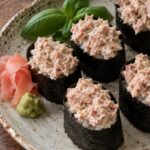
Gunkan sushi is a type of Japanese sushi made with an oval of sushi rice wrapped in a strip of nori seaweed and topped with ingredients such as salmon, tuna, fish roe or other fillings. Also known as gunkan maki, these little “sushi boats” are surprisingly easy to make at home. I'll show you exactly how to make them step by step.
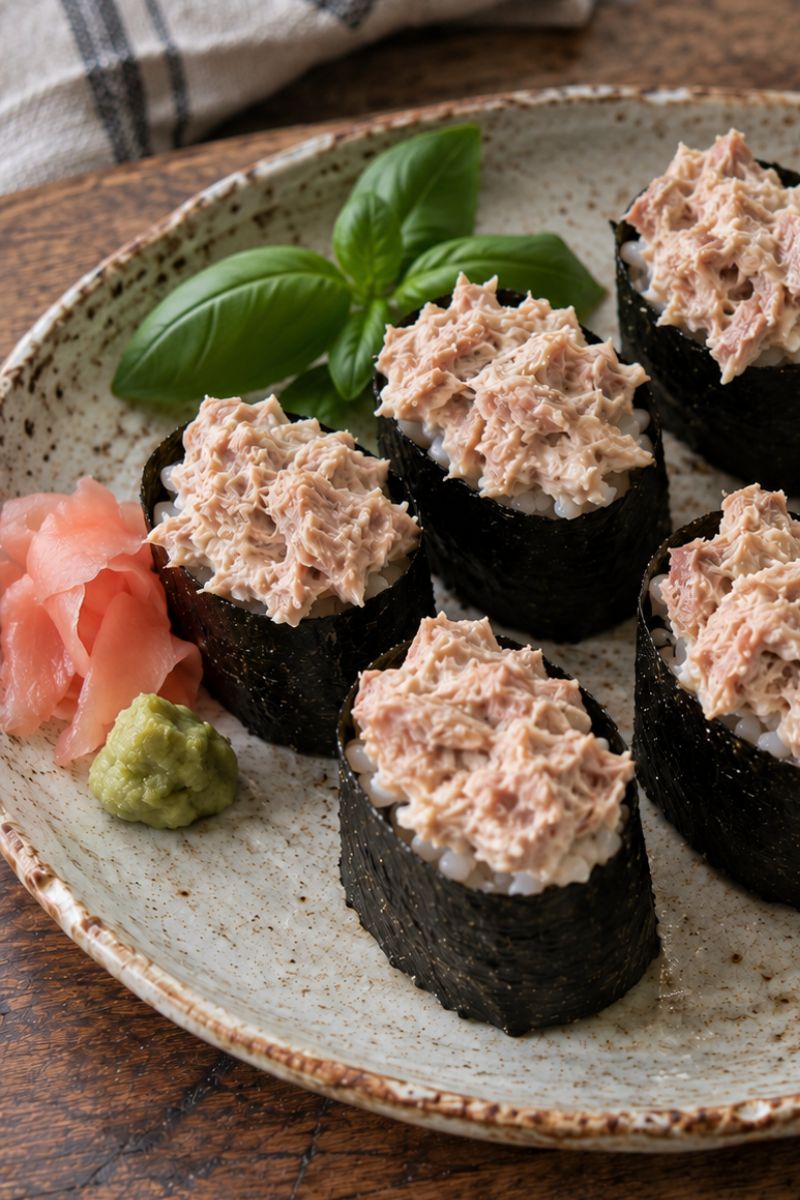
Hand-held treasure chests for you 🏴☠️ 👆🏼
Jump to:
🎥 How to make Gunkan Sushi
🍣 What Is Gunkan Sushi?
Gunkan sushi is made by shaping a small oval of sushi rice, similar to nigiri, then wrapping it with a strip of nori seaweed to create a little “boat.” The open top holds the filling. In this easy version, I use canned tuna with Japanese mayo, making it an affordable and simple way to make gunkan sushi at home.
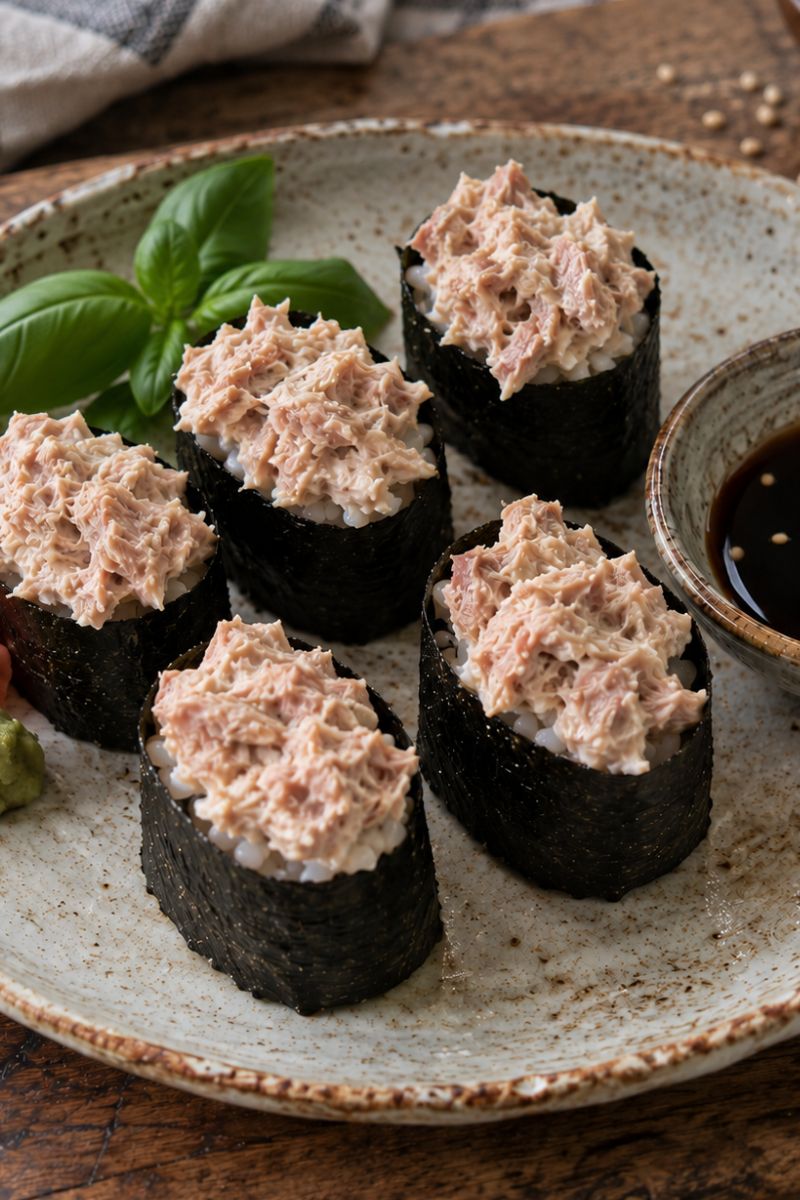
💰 Why is this recipe budget-friendly?
🥢 Simple ingredients: You only need sushi rice, nori, canned tuna, Japanese mayo and soy sauce — inexpensive ingredients that are easy to find at most supermarkets.
🍣 No special tools required: Unlike traditional maki rolls, Gunkan sushi doesn’t need a bamboo mat or fancy equipment — just your hands!
💸 Restaurant-style at home: Making Gunkan sushi at home saves big compared to dining out.
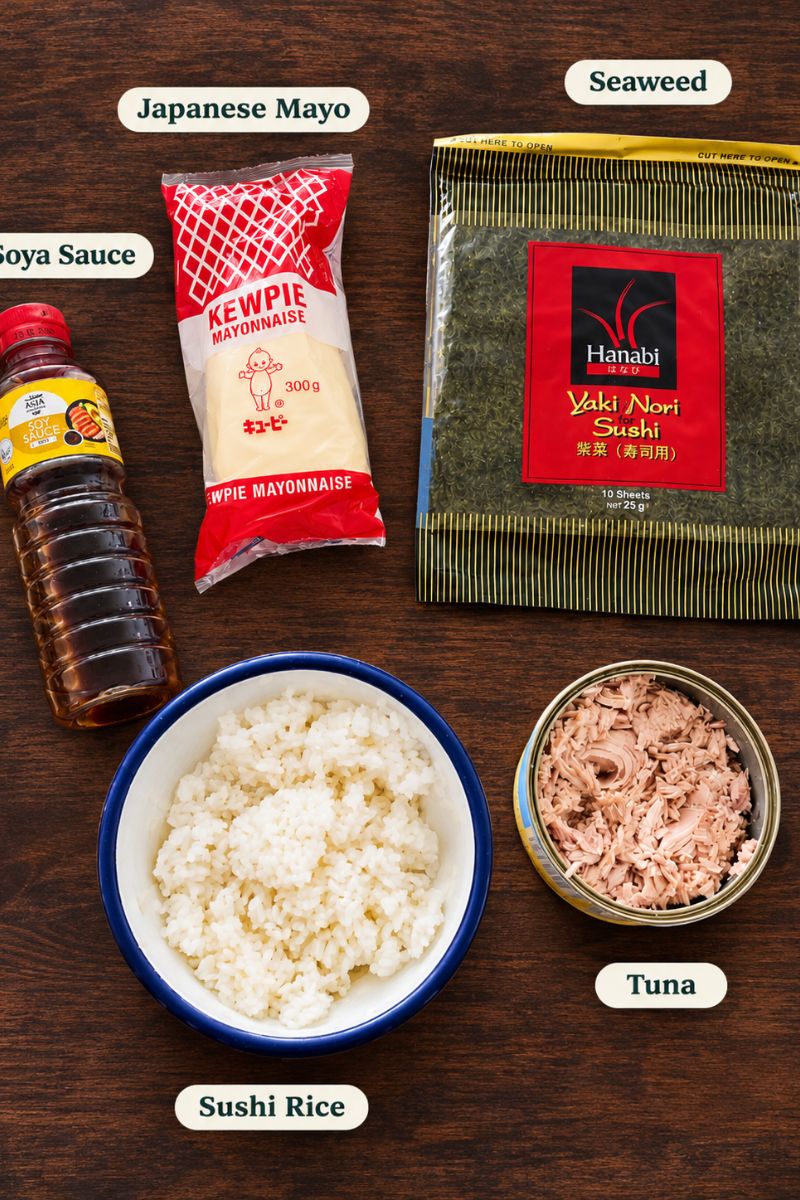
🥄 Ingredients for Gunkan Sushi
1 cup sushi rice, cooked and seasoned
The sticky texture helps the rice hold its oval shape.
1 sheet nori (seaweed)
Cut into strips wide enough to wrap around the rice and create the classic gunkan “boat.”
1 can tuna, drained
An easy and affordable filling for homemade tuna gunkan.
1 tablespoon Japanese mayo
Makes the tuna filling creamy and adds a slightly sweet, tangy flavour.
1 teaspoon soy sauce
Adds a salty, savoury umami flavour.
👩🍳 How to Make Gunkan Sushi
Note: Please scroll to the full printable recipe card at the bottom for ingredient quantities and the method
Prepare the rice: Cook the sushi rice according to the packet instructions. Season with rice vinegar, sugar and salt, then allow it to cool slightly.
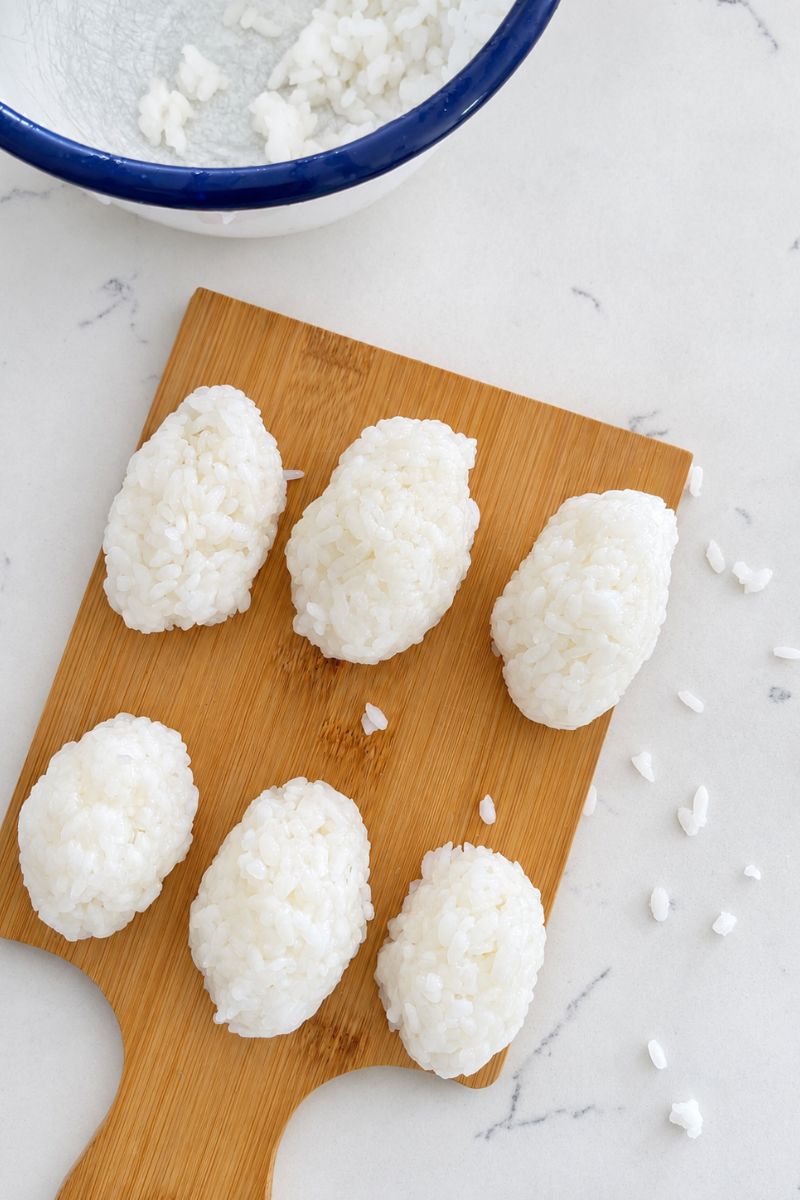
Shape the rice: Wet your hands with a little water to prevent sticking. Shape the rice into small oval pieces, about the size of two bites.
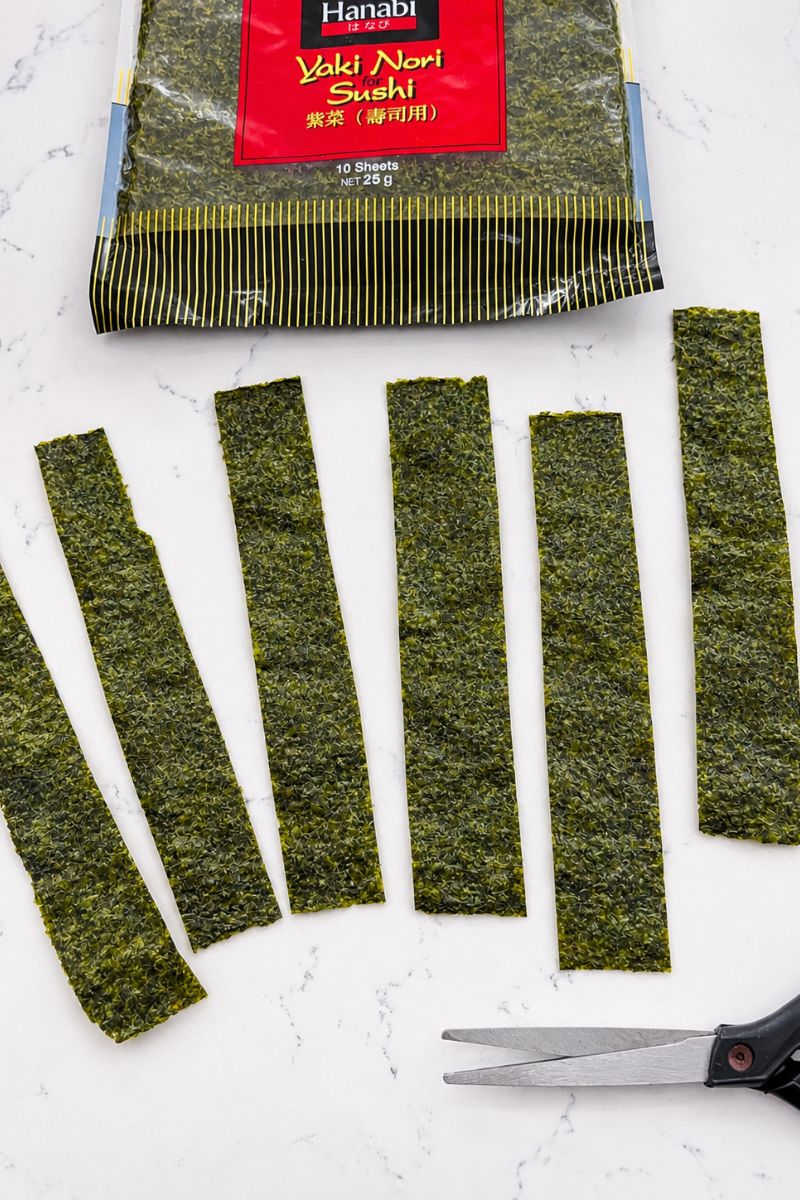
Wrap with nori: Cut the nori into strips and wrap one around each rice oval, leaving a little nori extending above the rice to create the classic gunkan “boat.” Seal the overlapping edge with a dab of water.
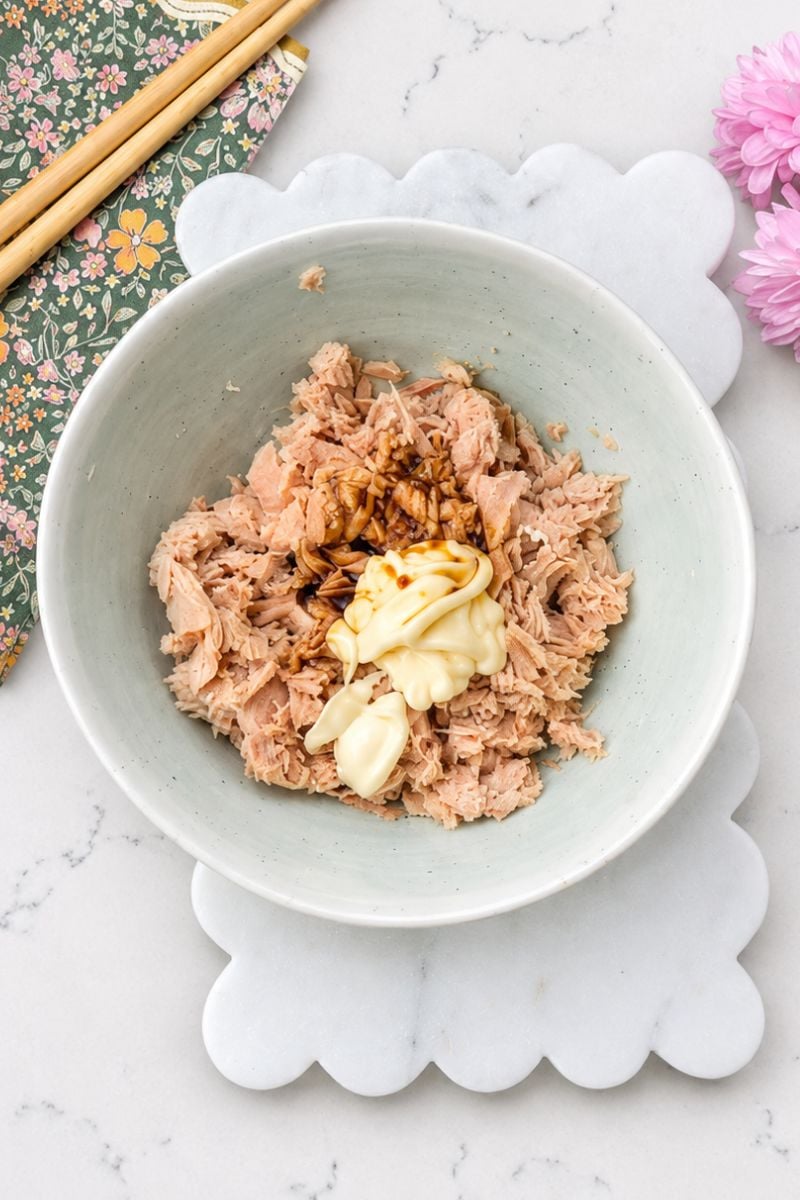
Make the tuna filling: Drain the canned tuna well, then mix it with the Japanese mayo and soy sauce until creamy.
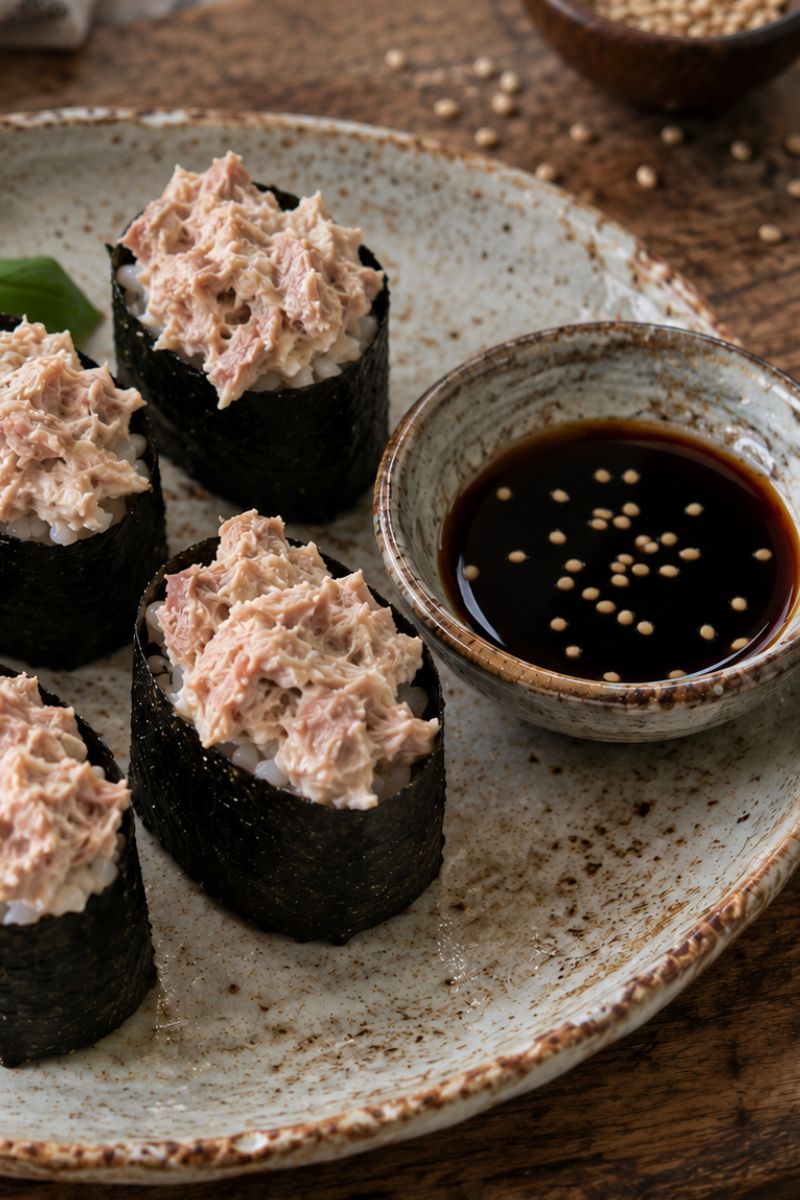
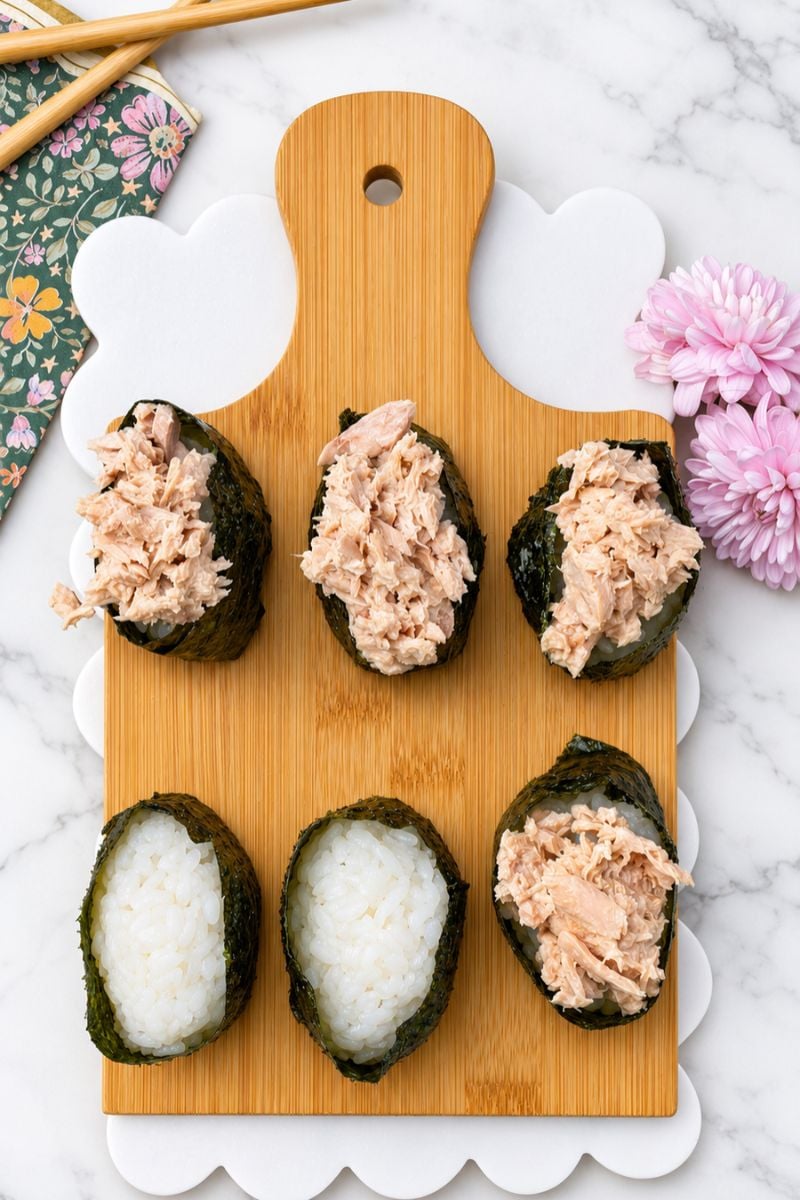
Assemble: Spoon the creamy tuna mixture into the top of each nori-wrapped rice base. Serve straight away with soy sauce on the side.
🍣 Gunkan Sushi Topping Ideas
Canned tuna is my easy, budget-friendly filling, but one of the best things about gunkan sushi is how many different toppings you can use.
Spicy tuna – Mix tuna with Japanese mayo and a little sriracha or chilli sauce.
Salmon – Finely chopped salmon makes a rich, traditional-style topping.
Crabstick salad – Mix chopped crabstick with Japanese mayo for a creamy filling.
Tofu and cucumber – A simple vegetarian gunkan filling with plenty of crunch.
Shrimp – Chopped cooked shrimp works well with Japanese mayo and a little soy sauce.
Fish roe – Flying fish roe (tobiko) or salmon roe (ikura) are classic gunkan sushi toppings.
❓ FAQS
Gunkan sushi can be part of a balanced diet, depending on the filling and portion size. Tuna provides protein, while sushi rice supplies carbohydrates. You can also experiment with vegetables, avocado, or tofu for different flavors and textures.
Gunkan means “warship” or “battleship” in Japanese. The name comes from the distinctive boat-like shape of the sushi.
Gunkan sushi is best assembled shortly before serving so the nori stays crisp. You can prepare the rice and tuna filling ahead of time, then assemble the pieces when you're ready to eat.
Maki sushi is made by rolling rice and fillings together, usually with nori seaweed, before slicing it into pieces. Gunkan sushi is different! Small ovals of rice are wrapped with nori to create little sushi boats, which are then filled with toppings such as tuna, salmon, or fish roe.

Did you make this recipe? Let me know what you think by leaving a ★★★★★ star rating & comment below. It genuinely helps me & I really appreciate your support! Nikki 💚
Easy Tuna Gunkan Sushi
- Total Time: 30 minutes
- Yield: 6 pieces 1x
Description
Easy tuna gunkan sushi made with seasoned sushi rice, nori and a creamy canned tuna filling. A simple, budget-friendly way to make gunkan sushi at home.
Ingredients
- 1 cup cooked sushi rice
- 1 sheet nori seaweed, cut into 1 ½-inch (4 cm) strips
- 1 can tuna, drained (185g)
- 1 tablespoon Japanese mayonnaise (Kewpie)
- 1 teaspoon soy sauce
- Rice vinegar and sugar, for seasoning (according to package instructions)
Instructions
- Prepare the Sushi Rice: Cook the sushi rice according to the package instructions. Once cooked, season with rice vinegar and sugar according to the package directions. Mix gently and allow the rice to cool slightly before shaping into small ovals.
- Shape the rice: Wet your hands slightly and shape the rice into small oval pieces, about the size of two bites.
- Wrap with nori: Cut the nori into strips and wrap one around each rice base, leaving a little nori above the rice to hold the filling. Seal the edge with a dab of water.
- Make the tuna filling: Drain the canned tuna well, then mix it with the Japanese mayo and soy sauce until creamy.
- Assemble: Spoon the creamy tuna mixture into each nori-wrapped rice base. Serve straight away with soy sauce on the side.
Notes
Keep your hands slightly wet when handling sushi rice to prevent sticking.
Want a vegan version? Use tofu tartar or avocado cucumber instead!
Add a sprinkle of tempura flakes or chili oil for crunch and spice.
- Prep Time: 30 minutes
- Category: Appetizer, Snack
- Method: Stove Top
- Cuisine: Japanese
Nutrition
- Serving Size: 1 piece
- Calories: 57 kcal
- Sugar: 0.2 g
- Sodium: 130 mg
- Fat: 2.0 g
- Saturated Fat: 0.3 g
- Unsaturated Fat: 1.5 g
- Carbohydrates: 5.3 g
- Fiber: 0.3 g
The nutritional and calorie information provided for this recipe is an estimate. The accuracy of the information listed is not guaranteed.
Comments
No Comments