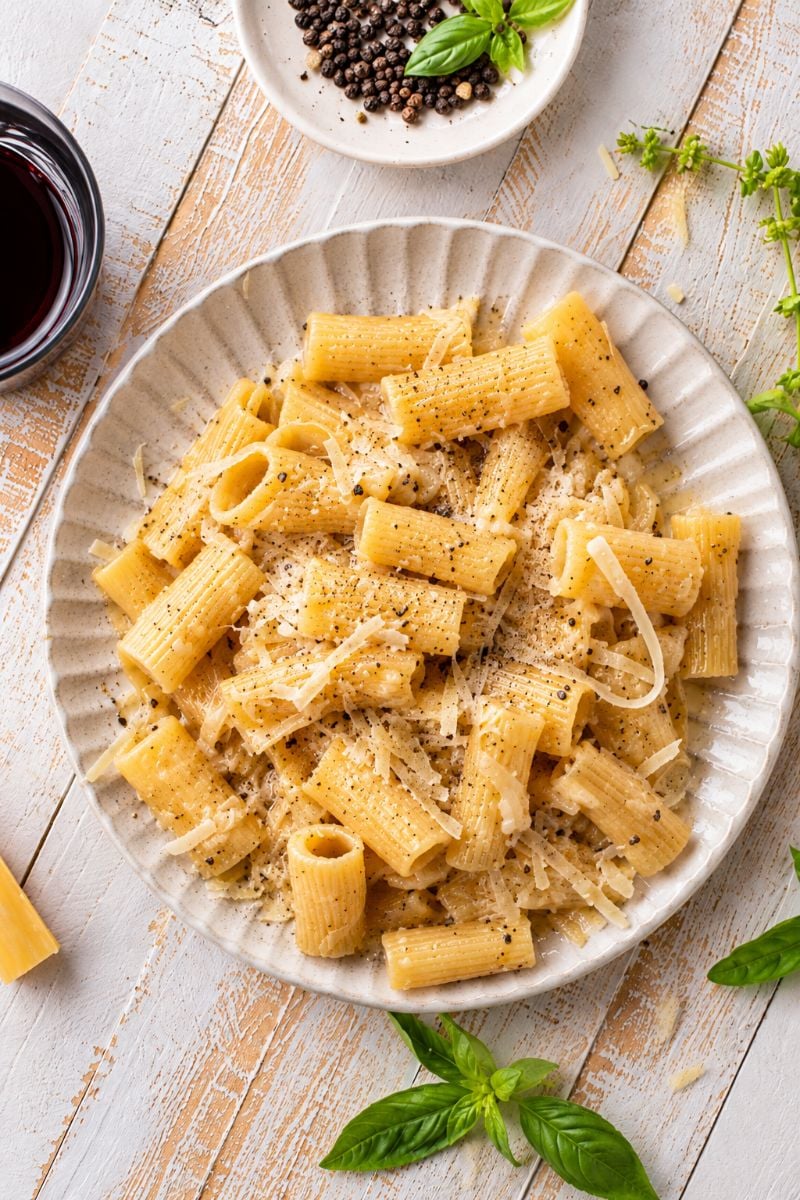
This easy cacio e pepe pasta recipe is creamy, cheesy, and ready in just 20 minutes! Made with rigatoni, freshly grated Pecorino Romano, black pepper, and pasta water, it's a simple Italian-inspired dinner that tastes restaurant-worthy without the fuss.
The secret to a silky, creamy sauce is combining the cheese with starchy pasta water. The ridges of the rigatoni catch all that delicious peppery sauce, making every bite delicious. Best of all, you only need a handful of ingredients!
Buon appetite! 🍷
Jump to:
- What Is Cacio e Pepe Pasta?
- How Do You Pronounce Cacio e Pepe?
- ❤️ Why You'll Love This Recipe
- Ingredients Needed and Substitutions
- STEP-BY-STEP INSTRUCTIONS
- Tips and Tricks for the Perfect Cacio e Pepe Pasta
- ❓FAQS
- How Is Cacio e Pepe Different From Alfredo?
- Make-Ahead, Storage and Reheating
- Pasta recipes to try next
What Is Cacio e Pepe Pasta?
Cacio e pepe is a classic Roman pasta dish that translates to cheese and pepper. Traditionally made with pasta, Pecorino Romano cheese, freshly cracked black pepper, and starchy pasta water, it's proof that simple ingredients can create incredible flavor.
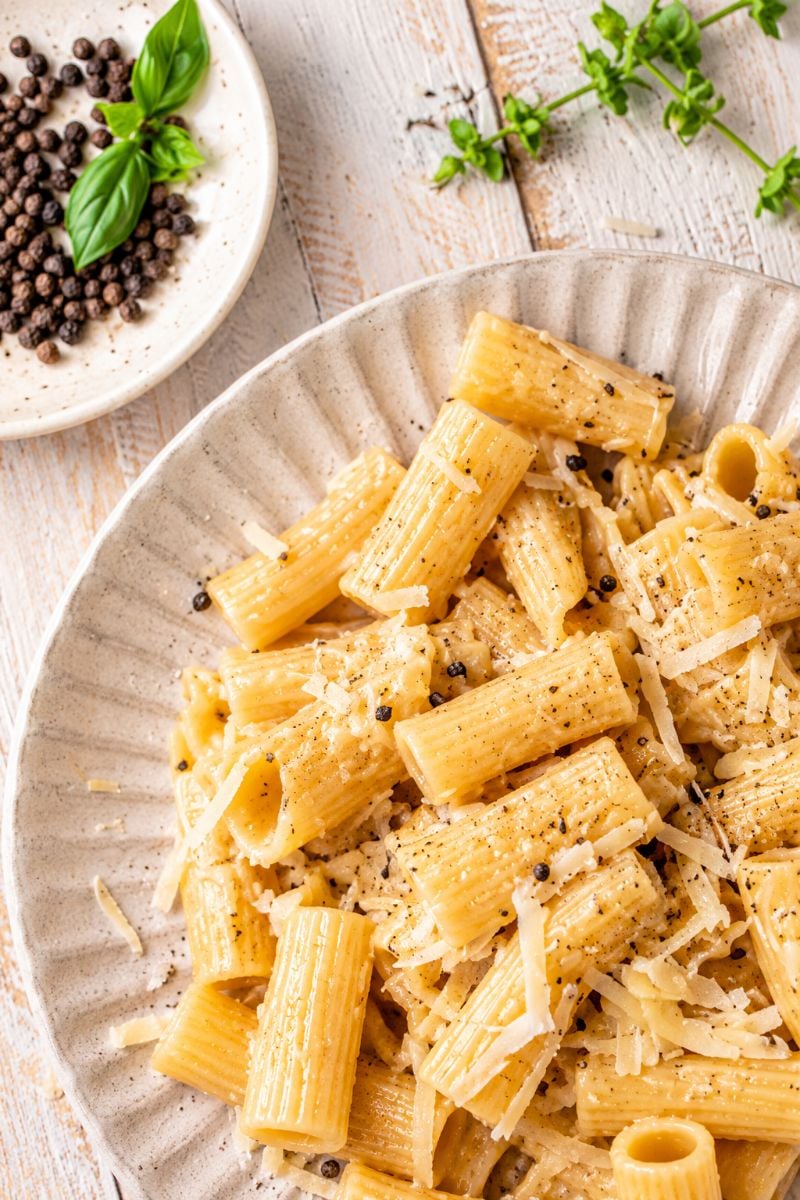
For this easy cacio e pepe pasta recipe, we're using rigatoni instead of traditional spaghetti. The ridges and hollow centers of the pasta help catch the creamy, peppery cheese sauce.
The secret is using starchy pasta water and gently combining it with finely grated cheese to create a silky sauce without adding cream.
How Do You Pronounce Cacio e Pepe?
Cacio e pepe is pronounced “KAH-choh eh PEH-peh.” It's an Italian phrase that means cheese and pepper, referring to the two ingredients that give this classic Roman pasta its delicious flavor: Pecorino Romano cheese and freshly cracked black pepper.
❤️ Why You'll Love This Recipe
Ready in 20 minutes: Perfect for busy weeknights.
Simple ingredients: Made with just a handful of pantry and fridge staples.
Creamy without cream: Pecorino Romano and pasta water create a silky sauce.
Full of flavor: Freshly cracked black pepper adds a delicious, slightly spicy kick.
Perfect for entertaining: An impressive pasta dish that's surprisingly easy to prepare.
Ingredients Needed and Substitutions
For exact measurements, scroll down to the printable recipe card.
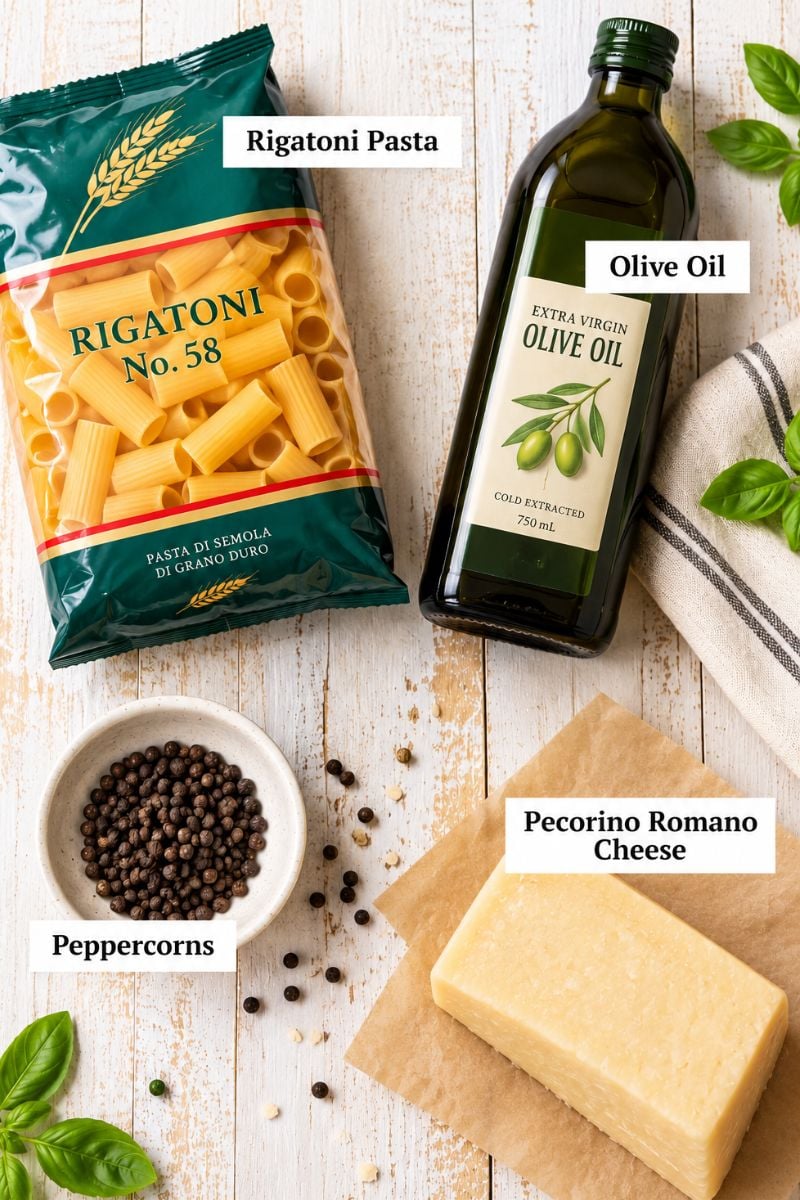
- Rigatoni pasta: The ridges and hollow centers catch the creamy cheese sauce beautifully. You can also use spaghetti, bucatini or tonnarelli.
- Whole black peppercorns: Freshly crush or grind them for the best flavor. Toasting the pepper briefly helps release its aroma.
- Extra virgin olive oil or butter: Used in this version to help toast the pepper.
- Pecorino Romano cheese: The star ingredient! Use freshly and finely grated Pecorino Romano for its salty, tangy flavor. Parmesan can be substituted, but the flavor will be milder.
- Reserved pasta water: Essential for creating a silky cheese sauce without cream. The starch helps the cheese and water come together.
- Salt: For seasoning the pasta water. Use a little less than usual because Pecorino Romano is naturally salty.
Need to Know: Always grate your Pecorino Romano fresh from a block. Pre-grated cheese may not melt as smoothly, and adding cheese to a very hot pan can cause it to clump. Remove the pan from the heat before combining the cheese with the pasta and starchy water.
STEP-BY-STEP INSTRUCTIONS
Step 1: Cook the rigatoni
Bring a pot of lightly salted water to a boil. Use enough water to cook the pasta comfortably, but not excessively, so the cooking water becomes nice and starchy.
Reserve the pasta water: Cook the rigatoni until al dente, following the package instructions. Before draining, reserve approximately ⅔ cup of starchy pasta water.

Step 2: Prepare the black pepper
While the pasta cooks, crush the peppercorns using a mortar and pestle or the back of a heavy pan. Freshly crushed pepper gives this dish its signature flavor.

Step 4: Toast the pepper
Heat the olive oil or butter in a large pan over medium-low heat. Add the crushed black pepper and stir for approximately 30–60 seconds until fragrant. Add a splash of reserved pasta water, followed by the cooked rigatoni.


Step 5: Make the creamy cheese sauce
Lower the heat. Gradually mix a little pasta water and the grated Pecorino Romano while vigorously stirring.
Tossing continuously: Gradually add more pasta water, a tablespoon or two at a time, until the pasta is coated in a silky sauce and the cheese has melted.

Step 6: Serve immediately
Divide the creamy cacio e pepe pasta between serving bowls. Finish with freshly cracked black pepper and extra Pecorino Romano, if desired.

Tips and Tricks for the Perfect Cacio e Pepe Pasta
- Use freshly grated Pecorino Romano: Grate the cheese finely from a block. Pre-grated cheese doesn't melt as smoothly and can make the sauce grainy.
- Save your pasta water: The starchy cooking water is the secret to a silky, creamy sauce without adding cream. Always reserve a cup before draining.
- Keep the heat low: Remove the pan from the heat before adding the cheese mixture. Too much heat can cause the cheese to clump.
- Freshly crack your black pepper: Whole peppercorns have a much stronger flavor than pre-ground pepper. Lightly toasting them in olive oil brings out their aroma.
- Add pasta water gradually: Start with a small amount and keep tossing until the sauce coats the rigatoni beautifully. You can always add more if needed.
- Serve immediately: Cacio e pepe tastes best freshly made while the sauce is smooth and creamy. It will thicken as it cools.

❓FAQS
Yes! Although traditional cacio e pepe uses black peppercorns, you can experiment with red or pink peppercorns for a milder, slightly fruity flavor. Keep in mind that the finished dish will taste different from the classic recipe.
Yes, ground black pepper works if you don't have whole peppercorns. However, freshly cracked black pepper provides a stronger aroma and more pronounced flavor.
The secret is controlling the temperature. Remove the pan from the heat and let it cool slightly before adding the cheese. Mix finely grated Pecorino Romano with a little warm pasta water to make a smooth paste, then toss it through the pasta. Add more pasta water gradually until the sauce becomes silky and creamy.
Yes! Parmesan is a good alternative if you can't find Pecorino Romano. It has a milder, nuttier flavor, whereas Pecorino Romano is saltier and tangier. For a more traditional cacio e pepe, Pecorino Romano is best.

How Is Cacio e Pepe Different From Alfredo?
Cacio e pepe and Alfredo are both creamy Italian pasta dishes, but they have different flavors and ingredients.
Cacio e pepe is made with Pecorino Romano cheese, freshly cracked black pepper, and starchy pasta water. It has a bold, salty, peppery flavor and doesn't need cream.
Alfredo traditionally uses butter and Parmesan cheese, creating a richer, milder sauce. Many American versions also include heavy cream.
Both are delicious, but cacio e pepe is perfect when you want a simple, cheesy pasta with a little peppery kick!
Make-Ahead, Storage and Reheating
Cacio e pepe pasta is best enjoyed fresh, while the cheese sauce is silky and creamy. However, you can prepare some ingredients ahead of time and store leftovers for another meal.
Make-Ahead: Save time by grating the Pecorino Romano and crushing the black peppercorns up to a day in advance. Store the grated cheese in an airtight container in the refrigerator. For the best texture, cook the pasta and prepare the sauce just before serving.
Storage: Store leftover cacio e pepe pasta in an airtight container in the refrigerator for up to 3 days. Refrigerate promptly, ideally within 2 hours of cooking.
Reheating: Gently reheat the pasta in a pan over low heat with a splash of water or milk. Stir frequently to loosen the sauce and prevent overheating. The sauce may not be quite as smooth as when freshly made.
Freezing: I don't recommend freezing cacio e pepe, as the cheese sauce can become grainy when thawed and reheated.
Pasta recipes to try next
creamy mushroom coconut pasta,
Did you make this recipe? Let me know what you think by leaving a ★★★★★ star rating & comment below. It genuinely helps me & I really appreciate your support! Nikki 💚
Easy Cacio e Pepe Pasta Recipe (20 Minutes)
- Total Time: 15 minutes
- Yield: 2 1x
- Diet: Vegetarian
Description
This easy cacio e pepe pasta recipe is creamy, cheesy, and ready in just 20 minutes! Made with rigatoni, freshly grated Pecorino Romano, black pepper, and pasta water, it's a simple Italian-inspired dinner that tastes restaurant-worthy without the fuss.
Ingredients
- 8 oz dried rigatoni (bucatini or spaghetti)
- ½ teaspoon whole black peppercorns (crushed)
- 2 tablespoons olive oil or butter
- ⅔ cup pasta water reserved
- ½ cup freshly grated Pecorino Romano plus more for garnish
- 2 teaspoons salt
Instructions
- Cook the rigatoni: Bring a pot of lightly salted water to a boil. Use enough water to cook the pasta comfortably, but not excessively, so the cooking water becomes nice and starchy.
- Reserve the pasta water: Cook the rigatoni until al dente, following the package instructions. Before draining, reserve approximately ⅔ cup of starchy pasta water.
- Prepare the black pepper: While the pasta cooks, crush the peppercorns using a mortar and pestle or the back of a heavy pan. Freshly crushed pepper gives this dish its signature flavor.
- Toast the pepper: Heat the olive oil or butter in a large pan over medium-low heat. Add the crushed black pepper and stir for approximately 30–60 seconds until fragrant. Add a splash of reserved pasta water, followed by the cooked rigatoni.
- Make the creamy cheese sauce: Lower the heat. Gradually mix a little pasta water and the grated Pecorino Romano while vigorously stirring.
- Tossing continuously: Gradually add more pasta water, a tablespoon or two at a time, until the pasta is coated in a silky sauce and the cheese has melted.
- Serve immediately: Divide the creamy cacio e pepe pasta between serving bowls. Finish with extra Pecorino Romano, if desired.
Notes
- Remember do not add all of the starchy water at once! Slowly and gradually add the starchy pasta water while vigorously stirring.
- Prep Time: 5 minutes
- Cook Time: 10 minutes
- Category: Main Course
- Method: Stove Top
- Cuisine: Italian
Nutrition
- Serving Size: per serving
- Calories: 639 kcal
- Sugar: 3 g
- Sodium: 308 mg
- Fat: 20 g
- Saturated Fat: 12 g
- Carbohydrates: 86 g
- Fiber: 4 g
- Protein: 23 g
The nutritional information provided for this recipe is an estimate. The accuracy of the information listed is not guaranteed.
Comments
No Comments